Choose your parting before choosing your lace
A clear way to compare lace areas, fixed parts and the hairstyles you actually want to wear.

The hairstyle you want to wear is a useful starting point for comparing lace construction. A centre part, a deep side part and hair swept away from the face can place different demands on a wig. Product names often contain several construction terms, but the most helpful information is the actual lace area, the stated parting options and the views of the finished piece. Make those details work together before deciding which style belongs in your collection.
Make a short styling brief
Choose two or three looks you genuinely expect to wear. For example, your brief might be a centre part on most days, a soft side part occasionally and a loose tuck behind one ear. A different shopper might want a fringe and no exposed part at all. Neither brief is more advanced; they simply lead to different questions.
Keep this list beside your product shortlist. It prevents a large lace dimension or an appealing title from distracting you from the actual job the wig needs to do. If you only enjoy one particular parting, a style designed around it may suit you well.
Find the usable area in the specifications
Read the stated lace dimensions and any construction diagram. Check whether the product explains where the lace sits and which parts of the cap use another construction. A named dimension should be interpreted with the product’s diagram or description, not treated as proof that every area of the cap can be restyled freely.
If the product lists a fixed part, identify its position. If it describes flexible parting, look for an explanation or demonstration of the available range. Ask about the exact style when the information is unclear. Two wigs can share a broad category while offering different practical styling options.
Use photographs to answer separate questions
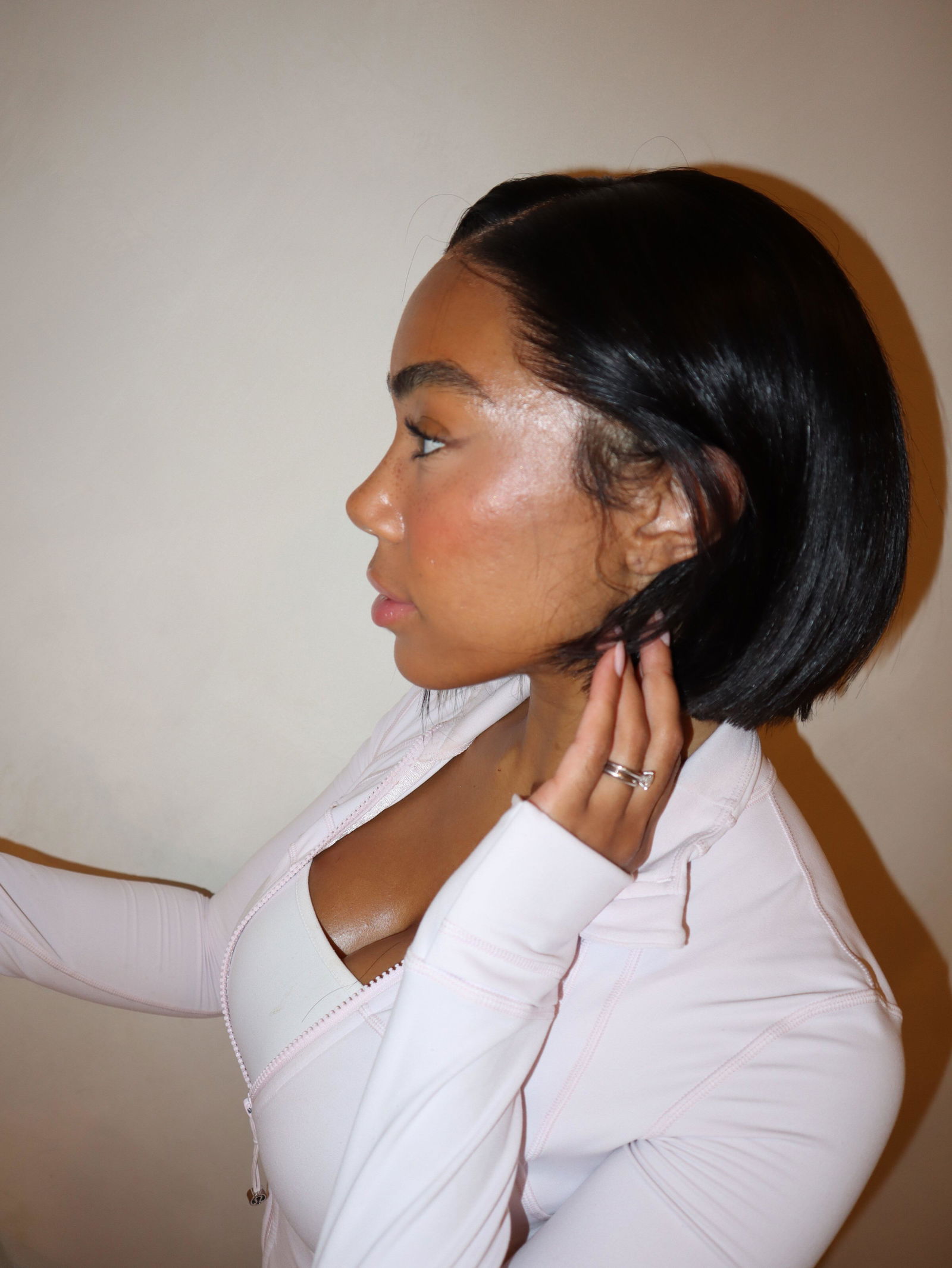
A front view helps you assess the photographed hairline and part. A side view can show how the hair sits near the ear. A back view gives you the overall shape, but does not necessarily reveal the construction underneath. Treat each image as one piece of information rather than expecting a single photograph to prove everything.
When a video is available, notice which areas are actually shown. A model turning her head is useful for seeing movement; it may not demonstrate a different parting. A close view of the cap is useful for construction; it does not show how your own fit will feel. Keep observations specific to what the material displays.
Distinguish a style choice from a cap modification
Moving hair within the stated parting area is different from cutting, plucking, bleaching knots or altering the lace. The latter changes may be irreversible and can affect the condition of the piece. Do not assume that a technique shown online is appropriate for every cap or that you need to perform it on a new wig.
If customisation is part of your plan, discuss the exact product with a stylist before ordering and review the return conditions before making changes. Explain the finished look you want instead of requesting a technique by name. That gives the stylist room to assess whether the construction supports the result.
Think about your installation routine
Read the attachment details alongside the lace information. A glueless label does not describe all the straps, bands, combs or fit requirements by itself. Decide whether the stated method works with your routine and whether you are comfortable maintaining it. The attractive parting in a photograph is only useful if the complete piece suits how you want to wear it.
Allow time for a careful first fitting. If the wig needs a different placement to sit properly, the part may look different from your initial mirror impression. Settle the fit first, then judge the balance of the hair around your face. Our cap-fit guide gives you a structured way to do that.
Your comparison checklist
Keep five facts for each candidate: lace area, stated parting range, attachment method, selected cap option and the looks shown in the gallery. Write “not stated” where necessary. This small record makes a final comparison far more useful than choosing by the longest title. Browse lace-front wigs with your styling brief in mind, and choose the construction that supports the looks you actually want.
Keep exploring. Your next chapter is yours to shape.
Back to the journal