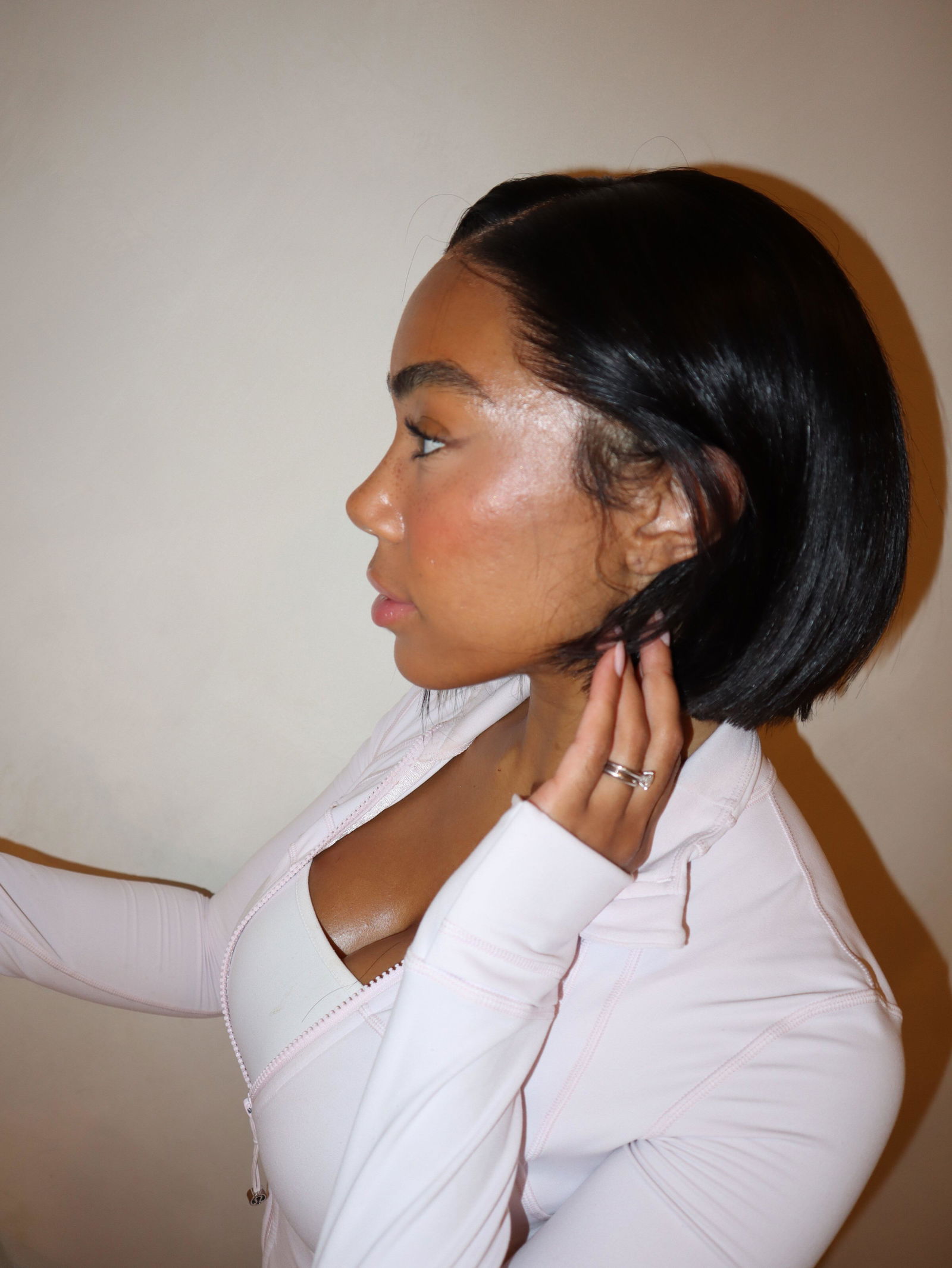
Detangle with a plan, not more force
Identify the tangle, choose the correct method and work in manageable sections without treating every texture the same way.

A tangle is easier to assess when you slow down enough to see where it starts. Repeatedly brushing the whole length can leave you pulling against the same knot without understanding it. Begin by identifying the material, condition and area involved, then follow the suitable detangling method for that piece. A structured approach gives you clear stopping points and better information if you need professional help with a stubborn section.
Identify what you are working with
Check the product’s care directions for the permitted tools and whether the hair should be dry, damp or otherwise prepared. Do not assume the same answer applies to every fibre or curl pattern. Keep guidance for a wig separate from guidance for your own hair, especially where cap construction and attachments are involved.
Look at the area before adding any product. Is it a small knot near the ends, several intertwined lengths or a compact area close to the cap? Note whether a clip, fastening or piece of jewellery is caught in it. Understanding the situation prevents you from treating every snag as an ordinary brushing task.
Organise one manageable section
Move the unaffected hair out of the way using a method appropriate for the piece. Work where you can see the section clearly and support it without pulling against the attachment points. Give yourself enough time to pause rather than rushing to finish the entire wig in one session.
As one manufacturer example, Jon Renau’s human-hair care guidance describes detangling from the lower lengths upward and distinguishes tools for wet hair. Follow your own piece’s instructions for the exact method. The useful principle is to address a manageable area with the correct preparation rather than forcing a tool through resistance.
Use the tool to follow progress
Make small, controlled movements appropriate to the stated method. If the tool stops, return to the point of resistance and reassess. Do not treat the handle as a way to apply more leverage. Your aim is to release the tangle while preserving the construction, not to complete a fixed number of strokes.
Check the section as you go. Once it moves freely according to the intended finish, leave it alone and proceed to the next area. For a curly style, separate detangling from the final curl arrangement; the appropriate finishing step should come from the product’s care instructions. Avoid repeatedly reworking an already finished section simply to match a photograph.
Pause before trying an unfamiliar treatment
A knot can make a quick remedy look tempting, but do not add oil, conditioner, heat or a household mixture without confirming that it is suitable for the material and construction. A product appropriate for the lengths may not be appropriate around the base or attachments.
If you use a permitted detangling product, follow its amount and application directions. Adding several products at once makes it difficult to tell what is happening and can create a more complicated clean-up task. Keep a note of anything you use so that a stylist can understand the situation if the tangle needs further attention.
Know when the task needs a different approach
Stop if you see an attachment coming loose, lace distorting or a compact section that will not release with the stated method. A stylist experienced with that kind of piece can assess whether further work is appropriate. Do not cut into a difficult section unless you have deliberately chosen a permanent change with suitable advice.
For a newly received item, document the condition and contact the store before treating it extensively. Keep the product link, selected option and clear photographs available. That is more useful than trying several interventions first and then attempting to reconstruct the original condition from memory.
Review the circumstances after the session
Record where the tangle occurred and what the hair encountered during wear or storage. A scarf, collar, fastener or packing method may be worth examining, without assuming it is definitely the cause. Change one practical factor at a time and observe the result. Keep your storage arrangement organised and your wash routine clear, so detangling becomes part of a considered process rather than a hurried rescue attempt.
Keep exploring. Your next chapter is yours to shape.
Back to the journal